
Roof Maintenance in NYC: How Often Should You Inspect Your Roof?
Most NYC roofs should be inspected twice a year, once in spring and once in fall, plus a quick check after any major storm. Flat roofs, older roofs and buildings with heavy tree cover do better on a quarterly schedule. The goal is simple: find small problems in the season they start, not after a leak appears.
Roof maintenance is the least dramatic thing you can do for a building and the cheapest. Nothing looks urgent until water is already inside, and by then the roof is rarely the only repair on the list. Below is a plain schedule for New York City buildings, what a real inspection should cover, and what you can check yourself between visits.
How often should you inspect your roof in NYC?
Twice a year is the baseline for most homes and small buildings across the five boroughs. One visit in spring, after winter has finished freezing and thawing everything, and one in fall, before the first hard freeze arrives.
Add a check any time the city takes a beating, whether that is a nor'easter, a heavy snow load, high winds or a summer storm that dumps a lot of water fast. Storm damage rarely announces itself. A lifted shingle or an opened seam can sit quietly for months before it reaches your ceiling.
Buildings that usually need more than two visits a year:
- Flat roofs, because water leaves through drains instead of running off on its own.
- Roofs past 15 years, where the covering is already well into its service life.
- Buildings with trees near the roofline, since leaves and twigs block drains quickly.
- Rowhouses and brownstones with parapet walls, where the coping and flashing take the worst of the weather.
- Any roof with a repair history, because the same weak point tends to come back.
Why NYC weather is hard on a roof
New York hands a roof all four seasons and none of them are gentle. Winter runs the freeze thaw cycle: water works into a small crack, freezes overnight, expands, and leaves the crack slightly wider than it found it. Repeat that a few dozen times between December and March and a hairline gap turns into a leak path.
Then comes snow load and ice at the roof edge, which backs water up under the covering instead of letting it drain. Summer pulls the other way with heat and UV that dry out sealants and make membranes expand and contract every day.
Add rooftop equipment, foot traffic from cable and HVAC work, and the parapet walls found on most rowhouses, and you get a roof made of small details that all need to stay sealed. Maintenance is how they stay sealed.
What does a proper roof inspection cover?
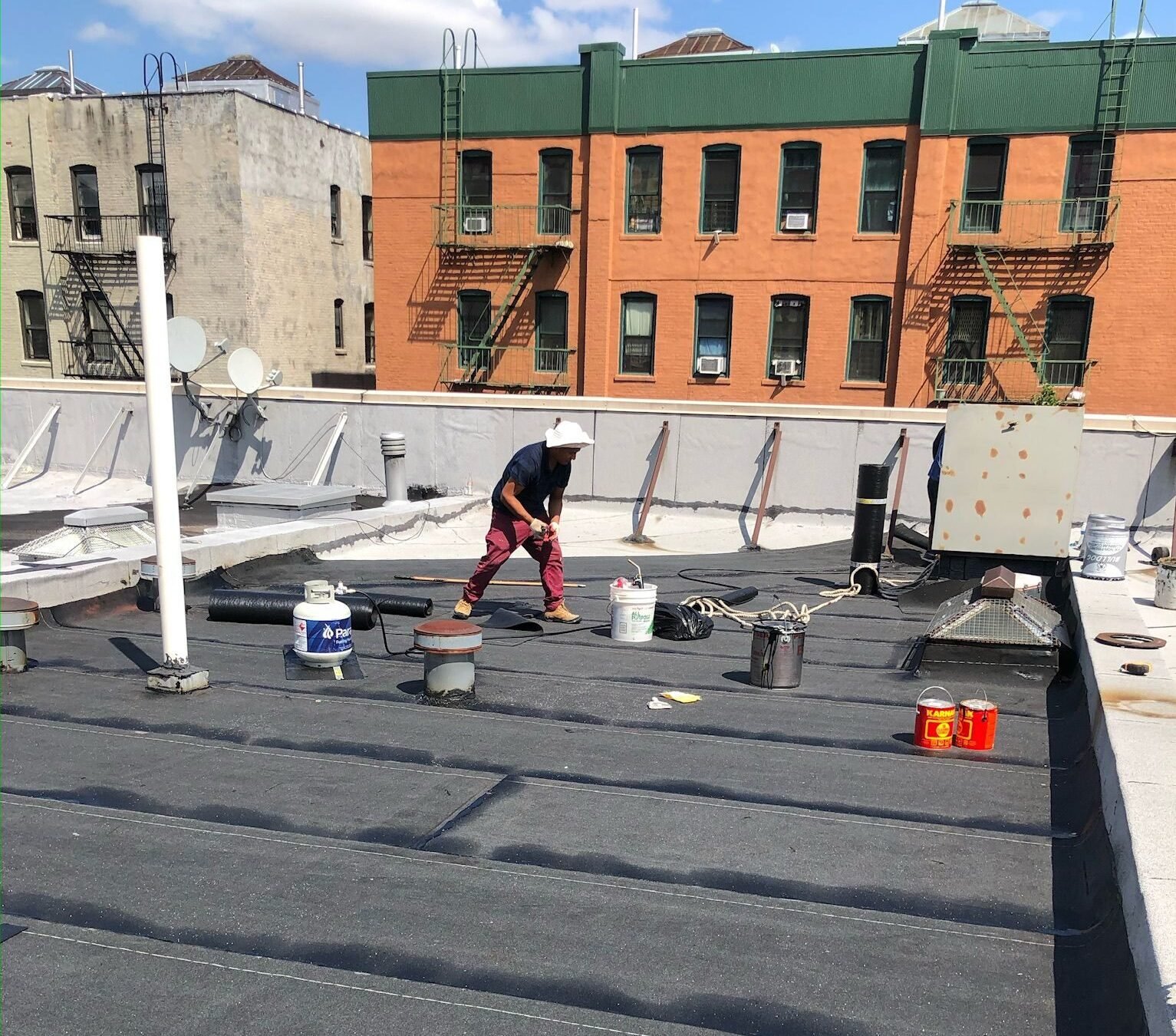
A real inspection is more than a look from the sidewalk. Here is what should be checked and reported on every visit.
Surface and covering
Shingles, membrane, tiles or coating checked for cracks, lifting, missing pieces and general wear.
Seams, flashing and penetrations
The transitions around chimneys, vents, skylights and walls, which is where most leaks actually begin.
Drainage
Gutters, scuppers, downspouts and roof drains cleared and tested so water leaves the roof instead of sitting on it.
Roof edge and parapet
Coping, edge metal and the top of the wall checked for open joints, loose sections and failed sealant.
Interior signs
Ceiling stains, damp insulation, mold and bubbling paint on the top floor often show a leak before the roof does.
Photos and a written report
What was found, what was handled on the spot, and what needs attention next, in plain language.
If you want that checklist run properly on your building, that is exactly what our roof inspection and maintenance service covers across all five boroughs.
Your year round roof maintenance calendar
Undo the winter
Clear debris, flush the drains and gutters, and look for freeze thaw damage such as cracked sealant, lifted shingles and open seams. Best time to fix small things cheaply.
Watch the heat
Blistering, dried out sealant and soft spots show up in high heat. Trim branches that hang over the roof and keep drains clear before the summer storms arrive.
The important one
Clean gutters and drains once the leaves are down, reseal anything tired, and get the roof watertight before the first freeze. This is the visit worth protecting.
Snow, ice and edges
Keep an eye on build up at the roof edge and around drains. Icicles forming along the edge usually mean heat is escaping and water is refreezing where it should not.
Does a flat roof need a different schedule?
Yes. On a pitched roof, gravity does part of the maintenance for you and water is gone in minutes. On a flat roof, water only leaves through drains and scuppers, so anything that blocks them turns into standing water within hours.
That is why flat roofs, which cover most NYC rowhouses, brownstones and small apartment buildings, sit better on a three or four visit plan with an extra look after heavy rain. Pitched and shingle roofs are usually fine on spring and fall visits plus a storm check. Either way, drainage is the first thing to look at, which is why gutter and skylight work is part of every maintenance visit.
What can you check yourself, and what needs a roofer?
Plenty is safe to do from the ground and from inside the building:
- Walk the perimeter after a storm and look for shingles, tiles or debris that came down.
- Look up at the roof edge and gutters for sagging, gaps or plants growing out of them.
- Check top floor ceilings and walls for fresh stains, bubbling paint or a musty smell.
- Watch where water goes during heavy rain, since an overflowing gutter points straight at a blockage.
Leave the rest to a roofer. Walking a roof is dangerous, and it is easy to cause damage while looking for it, whether that is a footstep in the wrong place on an aging membrane or a ladder set against a soft gutter. Anything that means getting onto the roof, opening a seam or working near a parapet edge belongs to a trained crew with proper safety gear, and anything already leaking belongs in roof repair rather than maintenance.
What skipping maintenance actually costs
Roof problems do not stay the same size. A blocked drain becomes standing water, standing water works into a seam, and the water that gets through soaks insulation and decking long before a stain appears downstairs. At that point it is no longer a roof repair, it is a roof repair plus insulation, ceiling and paint.
Maintenance also protects you on paper. Insurers and buyers both want to see that a roof was cared for, and a folder of dated inspection reports with photos is the simplest way to prove it.
Frequently asked questions
How often should a roof be inspected in New York City?
What is the best time of year for a roof inspection?
Do I need an inspection if my roof is not leaking?
What is the difference between a roof inspection and roof maintenance?
Does regular maintenance really extend the life of a roof?
Book a roof inspection before the next storm
We inspect and maintain flat, shingle and tile roofs across Manhattan, Brooklyn, Queens, the Bronx and Staten Island, and every visit ends with photos and a clear written report.
Roof Inspection & Maintenance Call (917) 450-5719